

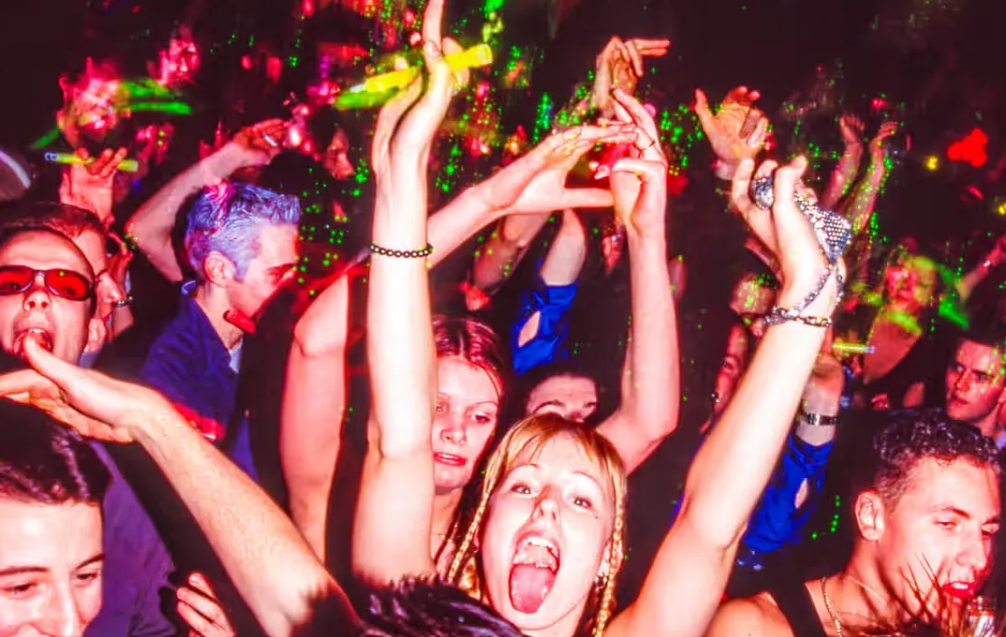
Open TikTok or Instagram on any weekend night and chances are your feed will be filled with flashing lights, neon makeup, tiny sunglasses, and groups of teenagers packed into basements or warehouses captioning their posts with one word: “rave.” What was once considered an underground music subculture has become one of Gen Z’s biggest aesthetics, influencing everything from fashion trends to birthday parties and social events.
In recent years, “rave culture” has exploded among young adults. Videos of EDM concerts, warehouse parties, and rave-themed events routinely gain millions of views. Fashion inspired by rave aesthetics such as glitter makeup, mesh clothing, kandi bracelets, fur boots, and colorful accessories have become increasingly mainstream. Even people who have never attended an actual rave are embracing the style and energy associated with it.
Part of the trend’s popularity may come from the environment many young adults grew up in. Gen Z spent formative years during the COVID-19 pandemic isolated from friends, school dances, concerts, and social gatherings. As restrictions lifted, many young people gravitated toward experiences centered around excitement, self-expression, and connection.
Unlike traditional clubs or parties, rave-inspired events are often seen as more expressive and less judgmental. Attendees dress boldly, experiment with makeup and fashion, and dance without many of the social expectations associated with mainstream nightlife. The environment can feel energetic, chaotic, and accepting all at once. However, longtime members of electronic dance music communities argue that today’s “rave culture” is very different from actual raving. Traditional rave culture originated in underground electronic music scenes during the 1980s and 1990s in cities like Chicago, Detroit, and London. These gatherings were heavily centered around house and techno music, community, and ideals often summarized by the acronym “PLUR” — peace, love, unity, and respect.
Today, the word “rave” is often used loosely online to describe almost any party with loud music, LED lights, or EDM remixes. For many, it has shifted from a music-based subculture into more of an aesthetic or social media identity. Social media has accelerated the trend dramatically. Viral “get ready with me” videos, outfit inspiration posts, and clips from major music festivals glamorize the rave lifestyle and make it accessible to millions of viewers.
Still, the rise of rave-inspired culture may reflect something deeper than aesthetics alone. Young adults today face increasing stress from academics, finances, politics, and the pressure of constantly being online. In response, many are drawn to spaces that feel energetic, emotional, and communal. For some, rave culture offers more than just music or fashion — it offers temporary freedom. In crowded rooms filled with strangers dancing under flashing lights, young people often describe feeling unusually connected, even if only for a few hours.
Whether viewed as a meaningful cultural movement or simply another internet trend, rave culture’s popularity continues to grow. While modern “raves” may look very different from the underground scenes that inspired them, their success reveals something important about Gen Z: a strong desire for connection, expression, and escape in a world that often feels overwhelmingly digital and disconnected.